Child Plan Policy
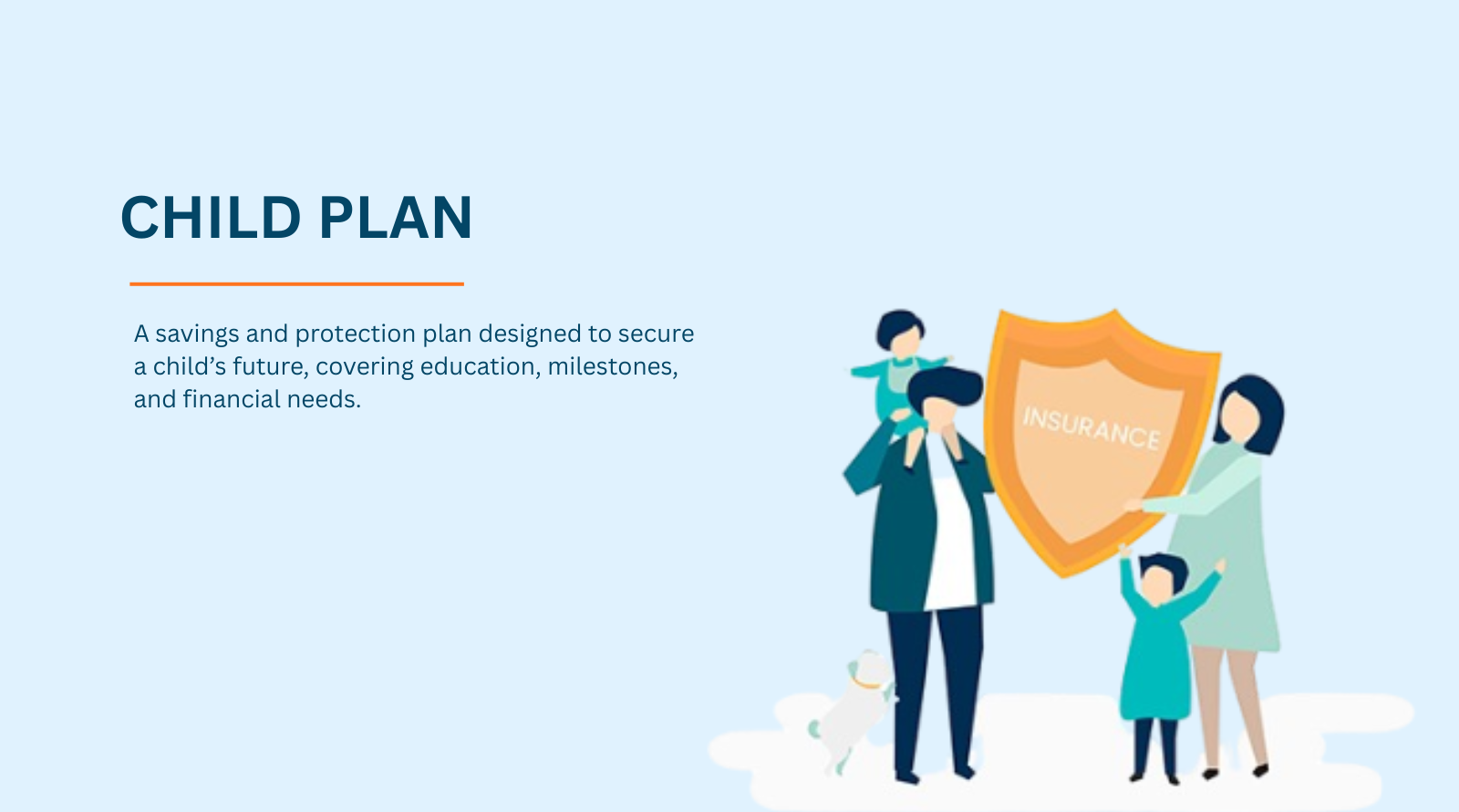
A Child Plan Policy is a specially designed life insurance and investment plan that ensures your child’s future financial security. It helps parents build a fund to meet major life goals such as education, marriage, or other important milestones — even in case of the parent's untimely demise. The plan provides both protection and savings to guarantee that your child’s dreams are never compromised.
These plans combine life insurance with long-term investment benefits. If the insured parent passes away during the policy term, the plan continues, and all future premiums are waived while the child still receives the policy benefits. Over time, the investment component grows into a valuable corpus, which can be used for your child’s higher education or other financial goals.
Key Features of Child Plan Policies
- 1. Insurance Protection: Provides life cover for parents, ensuring financial security for the child in the event of their absence.
- 2. Flexible Payout Options: Structured to provide funds at key milestones such as higher education or marriage.
- 3. Bonus Benefits: Many plans offer bonuses like reversionary or interim bonuses, increasing the maturity value.
- 4. Premium Waiver: On the parent’s death, future premiums are waived while the policy continues, ensuring uninterrupted benefits.
- 5. Tax Advantages: Premiums qualify for deductions under Section 80C, and maturity/death benefits are usually tax-free under Section 10(10D).
- 6. Additional Riders: Add-on options like critical illness, accidental death, or disability cover enhance protection.
- 7. Liquidity Support: Some policies allow partial withdrawals to meet urgent financial needs before maturity.
- 8. Investment Flexibility: Choose from equity, debt, or hybrid funds based on your financial goals and risk profile.
- 9. Long-Term Wealth Creation: Long-term savings and compounding help build a strong financial base for your child’s future.
Benefits of a Child Plan Policy
- 1. Financial Security: Guarantees your child’s education and future are protected even if you are not around.
- 2. Goal-Based Savings: Helps you plan ahead for major expenses like higher education or marriage.
- 3. Premium Waiver: Ensures the child receives full benefits without paying future premiums after the parent's death.
- 4. Tax Efficiency: Enjoy tax deductions on premiums and tax-free returns on maturity or death benefits.
- 5. Wealth Growth: Investment options allow your money to grow steadily over time to meet future goals.
- 6. Milestone-Based Payouts: Structured payouts ensure funds are available at key life stages.
Frequently Asked Questions (FAQs)
-
1. What is the best time to buy a Child Plan?
It’s best to start early when your child is young. Early investment allows more time for the corpus to grow through compounding and long-term returns.
-
2. What happens if the parent dies during the policy term?
If the parent passes away, the plan continues with a premium waiver, and the child receives all the benefits at maturity as originally planned.
-
3. Are Child Plan premiums tax-deductible?
Yes. Premiums are eligible for tax deductions under Section 80C, and maturity or death benefits are usually tax-free under Section 10(10D), subject to conditions.
-
4. Can I make partial withdrawals?
Yes. Some plans allow partial withdrawals to meet urgent needs like school fees or medical expenses before maturity.
-
5. Can I change the payout structure?
Most child plans offer flexible payout options—either lump-sum or periodic payments. You can choose based on your child’s future financial requirements.
Our Partners